How to Get Stronger Without Getting Bigger
Feb 14, 2025
Strength is about more than just muscle mass.
Your nervous system is the real driver behind how much weight you can lift.
Here’s how it works:
- Motor Unit Recruitment: Your nervous system learns to activate more motor units (muscle fibers) at once, increasing your ability to generate force.
- Firing Efficiency: Your motor units fire more quickly and in sync, allowing you to lift heavier without additional muscle mass.
- Coordination: Strength training improves both intramuscular coordination (within a single muscle) and intermuscular coordination (between different muscles), making your movements more efficient.
When you start training for strength, your body gets better at using the muscle you already have.
This is why beginners and intermediates often see rapid strength gains without noticeable changes in muscle size.
And this is why you'll see the occasional very skinny/scrawny guy lifting a ridiculous amount of weight.
The short answer is that his body is very neurologically efficient. (That, and he likely has very favorable muscle attachments, bone/limb lengths/proportions, and joint articulations).
Beginners: easy strength gains are on the table
Most beginners and even some intermediate lifters have never properly trained for strength.
Instead, they’ve focused on hypertrophy (muscle growth) or general fitness, neglecting the neurological side of strength development.
By emphasizing low-rep, high-intensity work (think 3–5 sets of 1–5 reps at 75–95%+ of your max), you can unlock easy strength gains, even if you’ve been lifting for years.
A great example of this is bodybuilders.
Bodybuilders are strong, no doubt, but because they almost never train in the 1–5 rep range, they are nowhere near capable of expressing their true strength potential.
They have a TON of mass, but very little neurological adaptation toward lifting 1–3 rep maximal weights.
Quick disclaimer
I'm not saying huge bodybuilders can't move a ton of weight for 1–3 reps. They can. I'm saying that relative to their muscle size, they are very likely nowhere near their maximum 1–3 rep max potential because they never train that rep range.
At a certain point, size matters
While neurological adaptations drive most of your initial strength progress, there is a ceiling.
And that ceiling is muscle size.
Once your nervous system has maxed out its efficiency, adding muscle mass (hypertrophy) becomes necessary to continue getting stronger.
Think of it this way:
- Your nervous system determines how much of your muscle’s strength potential you can use.
- Your muscle size determines how much strength potential you have.
But for most beginners and intermediates, this ceiling is far away.
There’s likely a lot of untapped strength just waiting to be unlocked.
If you’re trying to build muscle, get stronger, and improve endurance all at once, this post breaks down how to actually do that without sabotaging your progress.
How to train for strength without size
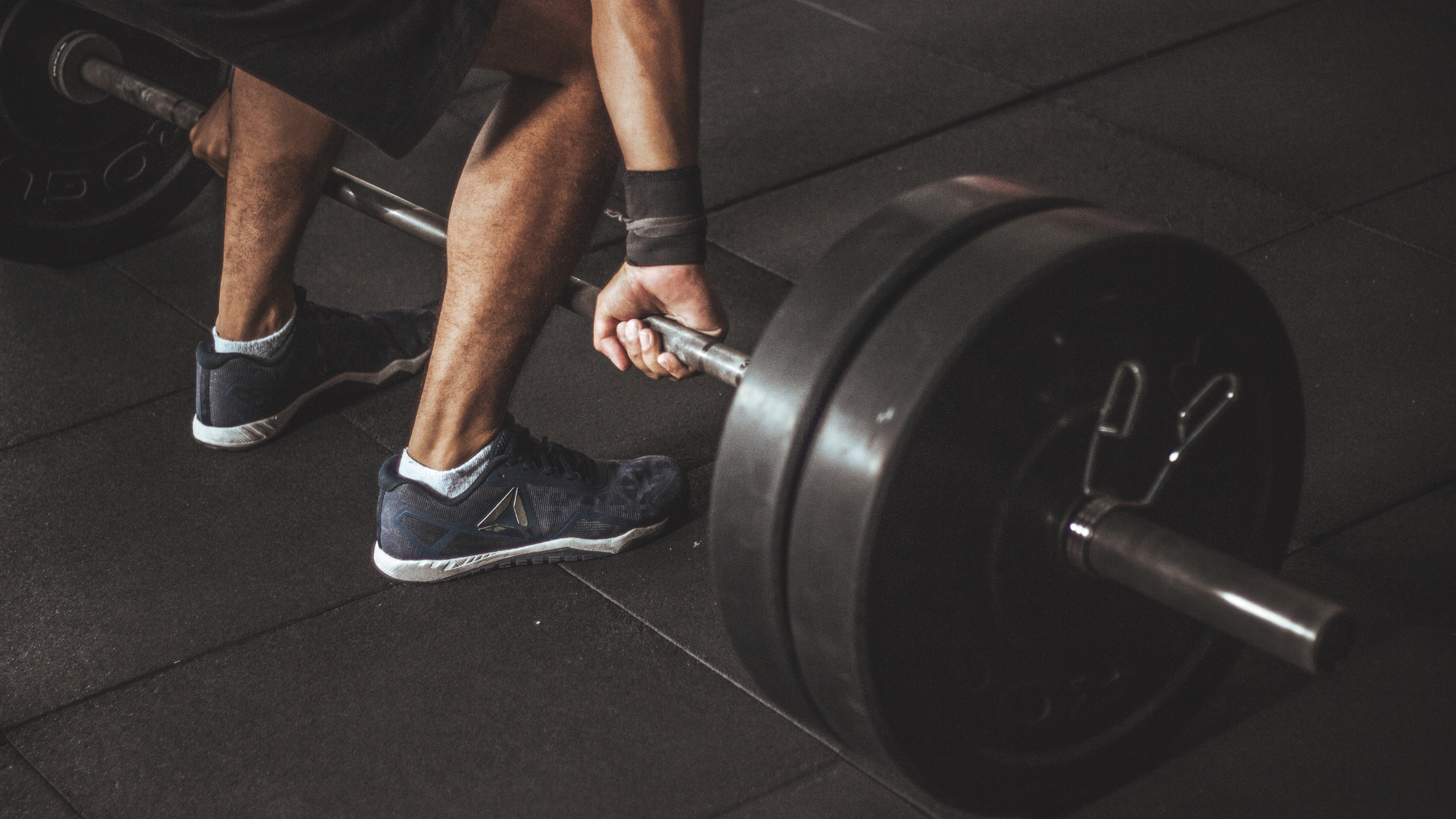
- Focus on Heavy, Low-Rep Sets: Stick to 1–5 reps with heavy weights to prioritize neurological efficiency over hypertrophy.
- Use Longer Rest Periods: Rest 2–5 minutes between sets to fully recover and maintain high intensity.
- Train Compound Movements: Squats, deadlifts, presses, and pulls recruit the most muscle fibers and improve coordination.
The bottom line
You can get significantly stronger without adding muscle mass by training your nervous system. (And by fixing technique and mobility/flexibility limitations, among other things).
If you’re a beginner or intermediate, there’s likely untapped strength just waiting for you to unlock.
And when you eventually reach your limit, adding size will take you even further.
Capacity Training
I built Capacity Training to plan your running and your lifting together, with Max Strength as one of its 3 lifting styles. Log your sets and it picks your next weights: earn it and the weight goes up, struggle and it holds or comes down.
Run faster. Get stronger. capacitytraining.app
Mike
NEWSLETTER
Interested in more health and fitness information like this?
Sign up for my weekly newsletter:
