
The Secret Weapon for Those New to Endurance Training
Apr 11, 2025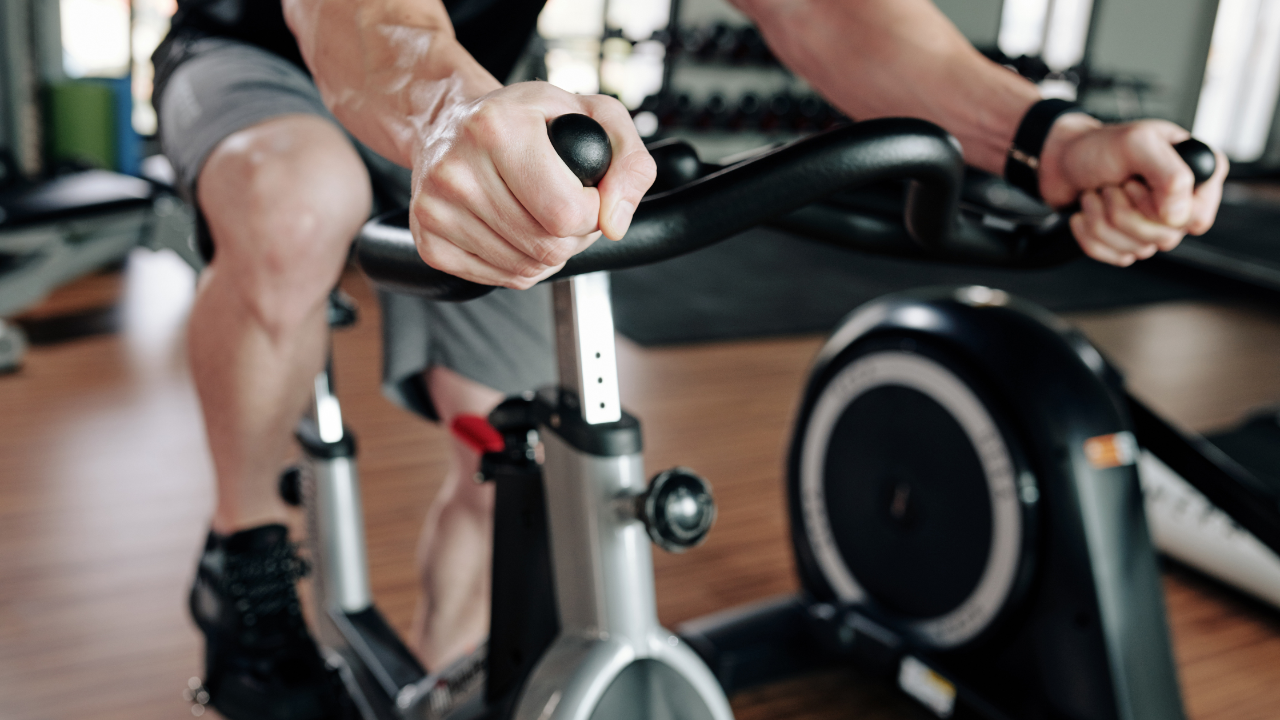
If you’re new to endurance training, you might assume that running is the best way to build your aerobic base.
But here’s the problem: most beginners aren't in good enough shape to be able to run at a low enough intensity to target the correct energy system.
Enter: Stationary Biking.
Biking allows you to control your heart rate much more effectively, ensuring you build endurance the right way, without overtraining, excessive fatigue, or injury.
The problem with running for beginners
Running is an impact-heavy activity that demands a certain level of strength and efficiency.
The biggest issue?
Most new runners can’t run slow enough to stay in Zone 1 or Zone 2, which is where most endurance-building happens.
- Even at an easy jog, many beginners find their heart rate creeping into Zone 3 or higher (moderate to hard effort).
- Slowing down often means walking, which many runners resist because it feels like "not training."
- Running too hard too often leads to burnout, soreness, and injury, making it difficult to train consistently.
Also, many lifters that want to start running are heavier than the average runner.
This is a recipe for injury.
Use the bike as your primary endurance training tool at first while you slowly increase your time on feet through walking and walk/runs.
Why stationary biking is a better starting point
- Easier to Control Heart Rate – On the bike, you can adjust resistance and cadence to keep your heart rate exactly where it needs to be (Zone 1 or 2), allowing for true aerobic development.
- Lower Impact on Joints – Running can be tough on the knees, ankles, and hips, cycling removes the impact stress, making it a safer choice for beginners.
- Longer, More Effective Training Sessions – Because cycling is lower impact, beginners can train longer without excessive fatigue, which means more time building endurance.
- More Consistent Progression – Unlike running, where fatigue and impact can limit frequency, biking allows you to build endurance more steadily.
How to use the bike for endurance training
If you’re just getting started, here’s a simple approach to ensure you're maximizing your aerobic base:
- Ride 3-4 times per week for 30-60 minutes per session.
- Keep your heart rate in Zone 1 or 2 (below ~75% of max HR). If you don’t have a monitor, use the talk test: you should be able to hold a conversation.
- Use a comfortable cadence (80-100 RPM) with light to moderate resistance.
- Stay consistent: the goal is to build endurance gradually, not to go all-out.
One note about HR zones on the bike vs running: Almost everyone has a lower max HR and therefore lower HR zones on the bike.
My max HR running is 190, on the bike it's low 170s.
My top end Z1 running is 135 and Z2 is 150. On the bike, top end Z1 is ~125 and Z2 is 135.
This rough conversion will work well for most as a starting point:
Use 90% of your running max HR as your biking max HR.
Then target 65-75% of that for your easy bike rides.
When to transition to running
After 6-8 weeks of consistent bike training, your aerobic base will be much stronger.
At this point, you can begin adding short run/walks (15-20 minutes) while keeping at least 50% of your endurance work on the bike.
Over time, as your fitness improves, you’ll be able to maintain a low heart rate while running, which is key to long-term endurance success.
Another great option is to walk as much as possible as you build endurance on the bike.
Walking will help get your body ready for the stresses of running. And depending on your level, you can start doing walk/runs sooner or even right away.
Just keep a majority of your early training on the bike.
The takeaway: build your base first
Most beginners struggle to run slow enough to stay in Zone 1 or 2, which is where real endurance gains happen.
Stationary biking solves this problem by allowing you to train smarter, not harder.
If you’re new to endurance training, prioritize the bike first.
You’ll build a stronger aerobic foundation, reduce your risk of injury, and set yourself up for long-term progress when you eventually transition to running.
Just be aware, biking at that HR will feel crazy slow, especially if you come from a high intensity (CrossFit) background.
I know it feels like it's too easy to be doing anything, but I promise, it is.
It will dramatically improve your endurance if you give it enough time.
Don't believe me?
Check out this article on how I used Z1 biking to go from a 20:35 5k to a 1:26 half marathon in 6 months.
Try this
Swap one or two of your runs for a Zone 1/2 bike session this week and focus on keeping your heart rate low.
You’ll be surprised at how much easier it is to stay in the right zone and how much better your endurance will be in the long run.
Capacity Training
I built Capacity Training to plan your running and your lifting together, and you can add cross-training like biking or rowing, or switch a run to an indoor bike. If you can't run 30 minutes yet, a walk/run plan builds you up to it.
Run faster. Get stronger. capacitytraining.app
Mike
NEWSLETTER
Interested in more health and fitness information like this?
Sign up for my weekly newsletter:
