
How I Improved My Zone 2 Pace By Over 2:30 in 1 Year
Feb 07, 2025
On the left is a ~5-mile run from January 7, 2024.
On the right is a ~5-mile run from January 9, 2025.
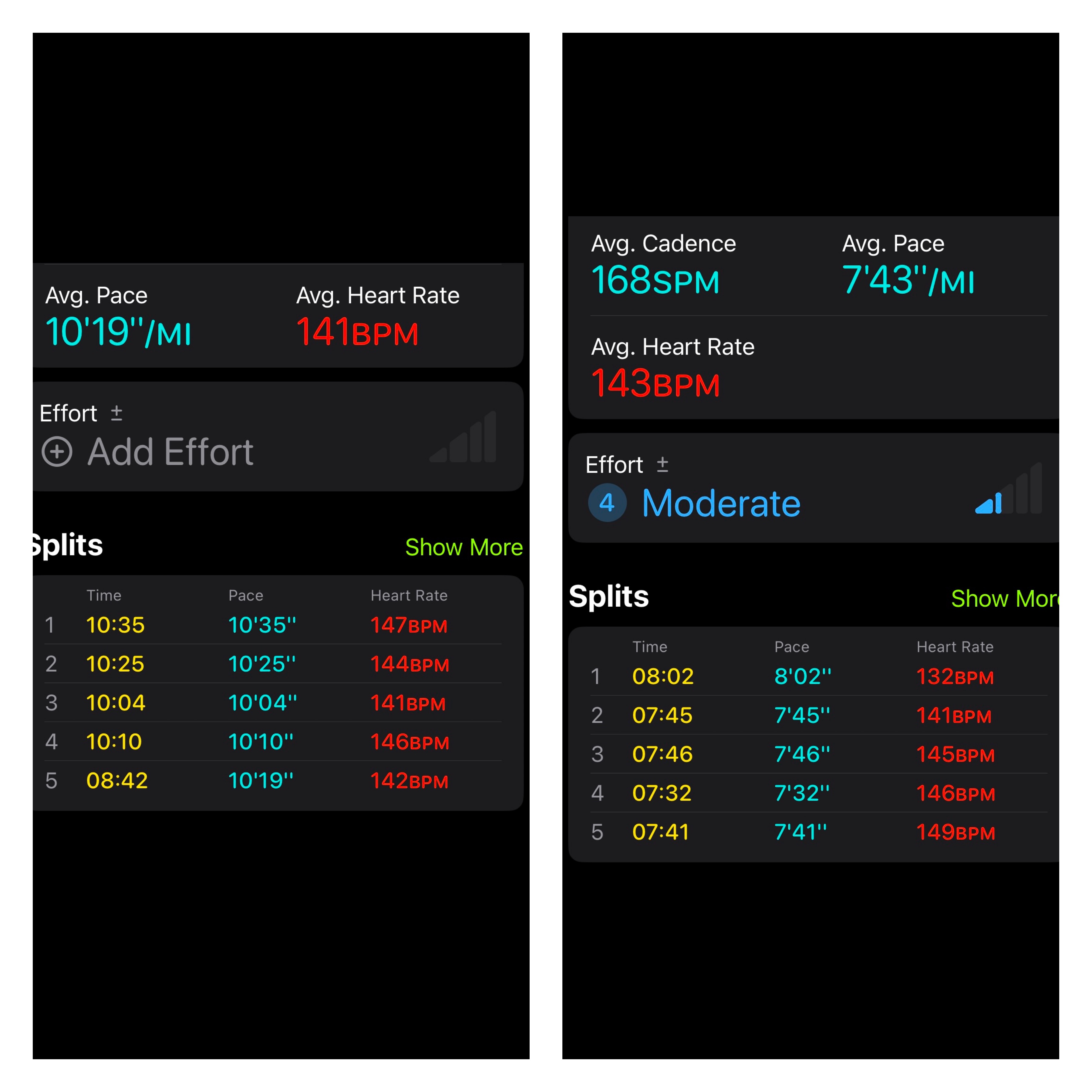
As you can see, at a similar heart rate, my Zone 2 pace is now over 2.5 minutes faster than last year.
And I did it only averaging 10 miles per week.
Here's how
1. Weight Loss
I’m 12–13 pounds lighter than I was a year ago.
Even a relatively small weight loss can have a big effect on running performance.
Now, not everyone needs to lose weight, especially pure runners, but for most, dropping some fat will help.
Less weight reduces impact forces, lowers the energy cost of running, and makes it easier to maintain a lower heart rate at the same pace.
In short, even just 10 pounds of fat loss can have a huge impact on your running ability.
2. Running
Over the past year, I averaged just 10.3 miles per week.
For the first nine months, I only ran 1–2 times per week, mostly all high-intensity interval type runs.
In mid-August, I increased to running three times per week.
Since September, I have mostly been running four times per week, averaging 16.3 miles per week.
Most of my running since August has been low-intensity:
- Three to four easy runs per week
- Zero to one high-intensity session per week
I'm currently pretty comfortable running 15–20 miles per week and plan to gradually increase that throughout 2025.
If you want to see how I took this approach even further, check out How I Turned My 5k Pace Into My Half Marathon Pace In 6 Months…By Only Running 1–2 Days Per Week.
3. Zone 1 Stationary Biking
This is my secret weapon.
I started Zone 1 biking in February 2024 and haven't stopped since.
Since then, I've averaged 2:53 hours of biking per week, occasionally hitting ~5 hours.
All of those bikes were done at 115–120 HR. (My max HR running is 190 and my max HR biking is ~175)
Biking has been a major factor in improving my aerobic endurance because I can accumulate a high volume of training while keeping impact low.
It also allows me to maintain strength since it doesn’t interfere with lifting as much as higher-mileage running would.
Z1 is so powerful because it delivers nearly all of the benefits of Zone 2 at significantly less "cost."
What this means is you can do a lot of it without it affecting the rest of your training.
5 hours of Z1 is much less stressful on the body than 5 hours of high-end Z2.
Currently, I bike 5–6 hours per week and plan to keep it at that level for a while.
Is this the best approach for everyone?
Nope. Far from it.
That said, I do think this style (lots of biking while slowly ramping up running volume) is a great strategy for those new to running, especially those coming from a high-intensity background, a strength background, and/or who are heavier.
Z1 biking is a great, low-impact way to improve aerobic endurance.
It's much easier to control HR and intensity than running, particularly when just starting out.
The coolest thing about the Z1 biking is that it allowed me to still lift heavy 2–4x per week and maintain most of my strength/size.
It’s low enough intensity that it allows for more lifting than I think only running would, but it’s still enough stimulus to improve endurance.
The trade-off: time commitment
The biggest drawback is that it takes time.
A lot of time.
- Only have 20 minutes a few times per week? Z1 is not for you.
- Have 3–6 hours per week? Z1 is for you.
If you have limited time, it's not the best use of your training hours.
But if you have the time and your goal is to build a large aerobic base, it’s an extremely effective method.
Consistency was the biggest factor
More than any single training method, the biggest driver of my improvement over the past year has been my consistency.
I did at least 3–4 hours of endurance training almost every single week.
I paid attention to the data and slowly progressed time/volume/intensity.
And I did that day after day, week after week, month after month.
I didn't see much improvement day to day or even month to month… but the longer I did it, the more improvement I saw.
This consistency is also how I was able to hit one of my proudest milestones yet: 1200# Total and Sub 1:30 Half Marathon in the Same Week.
Where to start
If you’re not sure where to begin:
- Just start moving more.
- Keep it easy, walk, run slow, bike slow, row slow.
- Stay consistent: aim for steady, low-intensity work for at least a few months.
- Progress gradually: increase volume before adding intensity.
The biggest mistake people make is going too hard, too soon.
Do everything slow and easy for at least a few weeks, ideally a few months.
Then you can start adding some intensity.
But above all: BE CONSISTENT.
Capacity Training
I built Capacity Training to plan your running and your lifting together, with heart-rate zones set from your max heart rate. You can add cross-training like biking or rowing, and the Load tab tracks your fitness, fatigue and freshness over time.
Run faster. Get stronger. capacitytraining.app
Mike
NEWSLETTER
Interested in more health and fitness information like this?
Sign up for my weekly newsletter:
