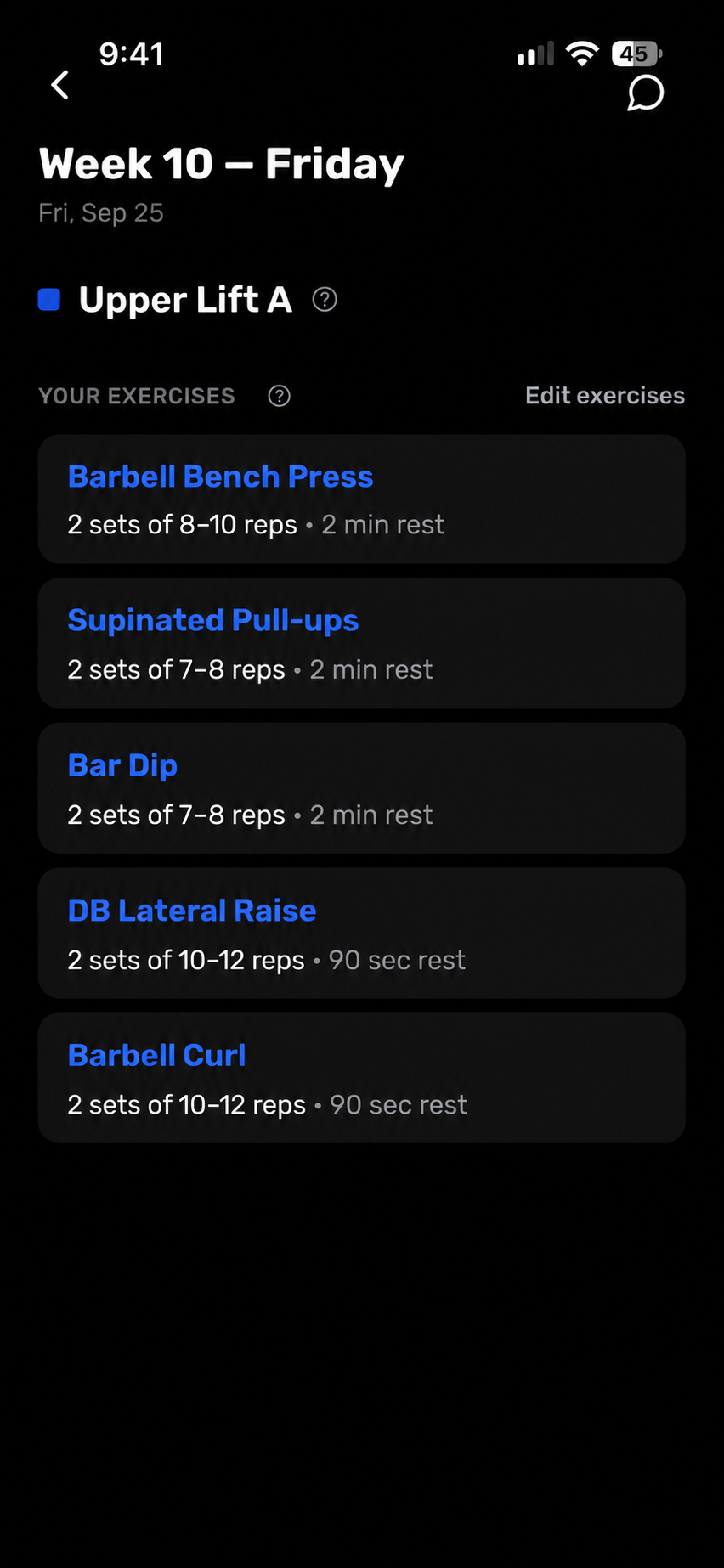
General Strength & Physique
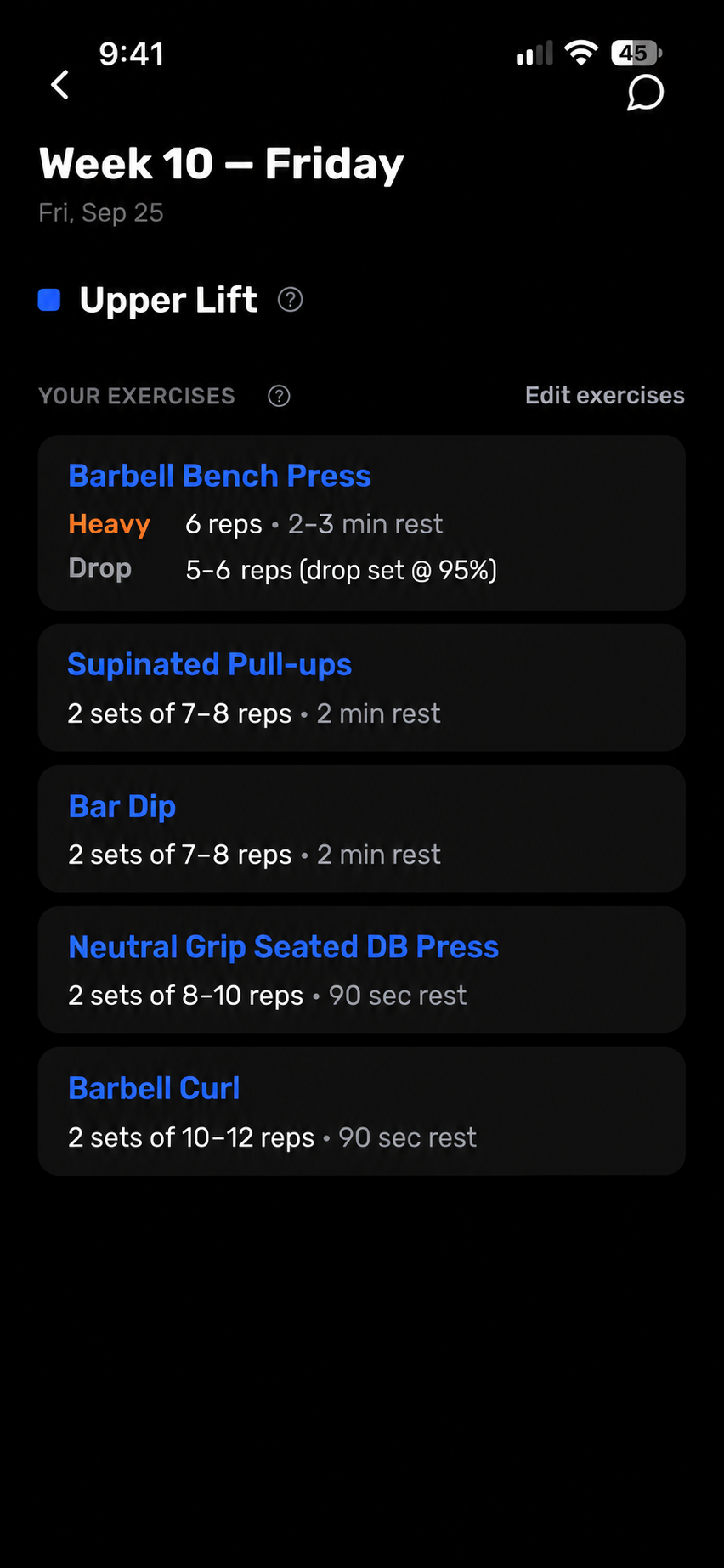
Example upper-body session
Capacity builds one plan for your running and lifting, customized to your goals, experience, and schedule. Then it keeps adjusting based on what you log and how you're recovering.
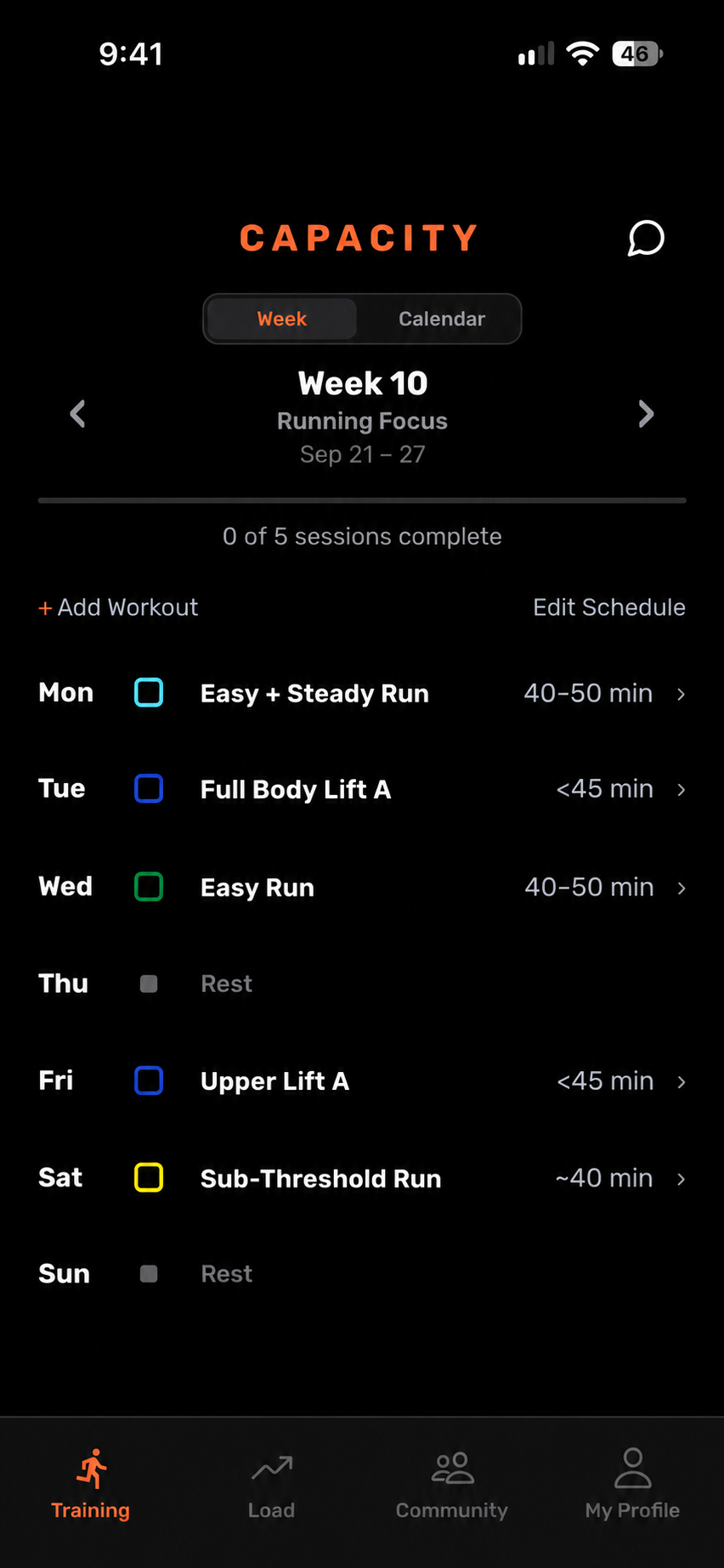
The problem
The usual approach is to take a full running program and a full lifting program and do both. Each one was written as if it's the only training you do, so together they add up to more than you can recover from.
Lifters who start running make it worse by running too hard. Almost every run turns into a hard effort, your legs are still beat up when it's time to squat and deadlift, and both start to stall.
Capacity programs both as one plan. Easy runs are capped by heart rate so they stay easy, hard runs and heavy lifts are programmed intelligently, and every plan opens with a ramp before hard intervals show up.
The running
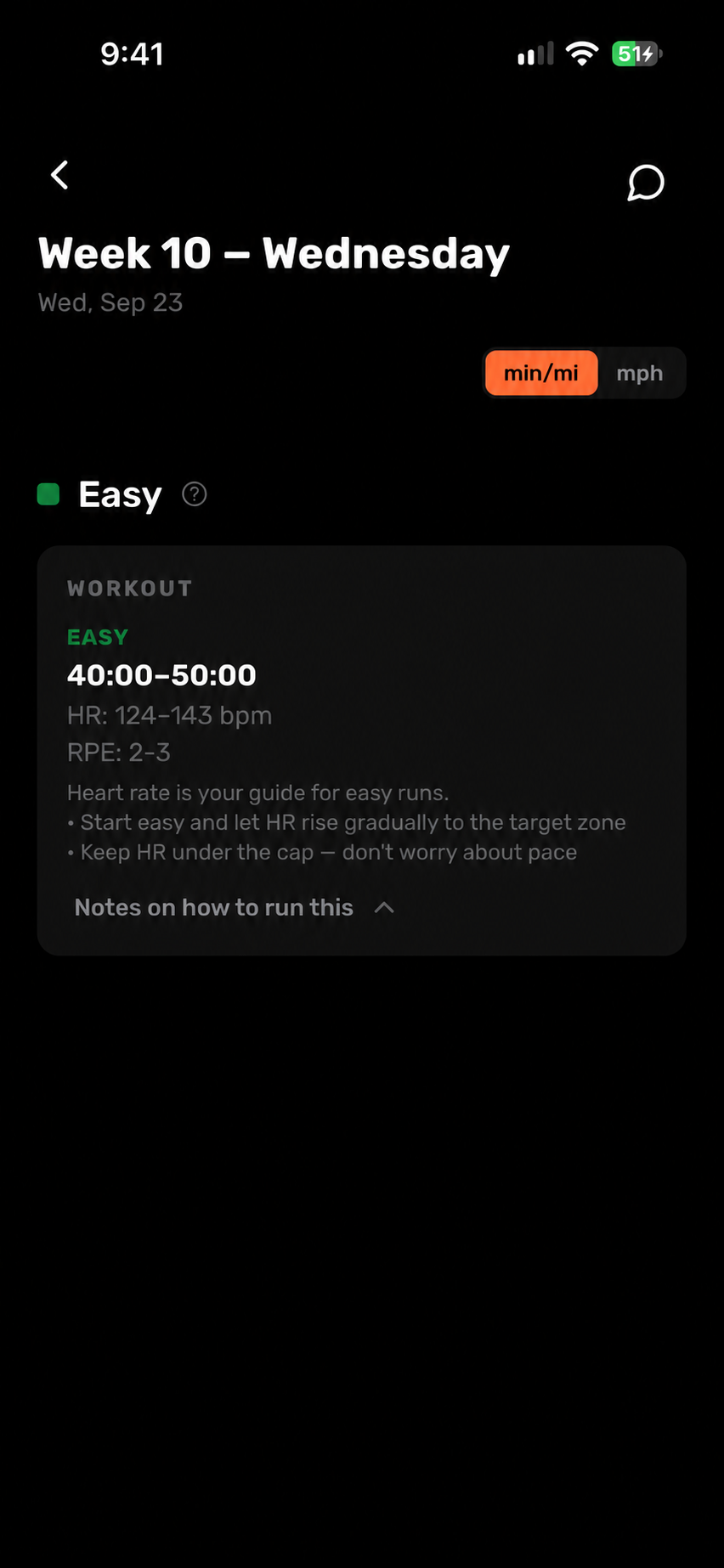
Get workouts with targets based on your running fitness, plus practical coaching notes to help you carry them out.
Train year-round. Keep building with ongoing training, even without a race on the calendar.
Prepare for race day. Build toward a mile, 5K, 10K, or half marathon with distance-specific workouts and race-week preparation.
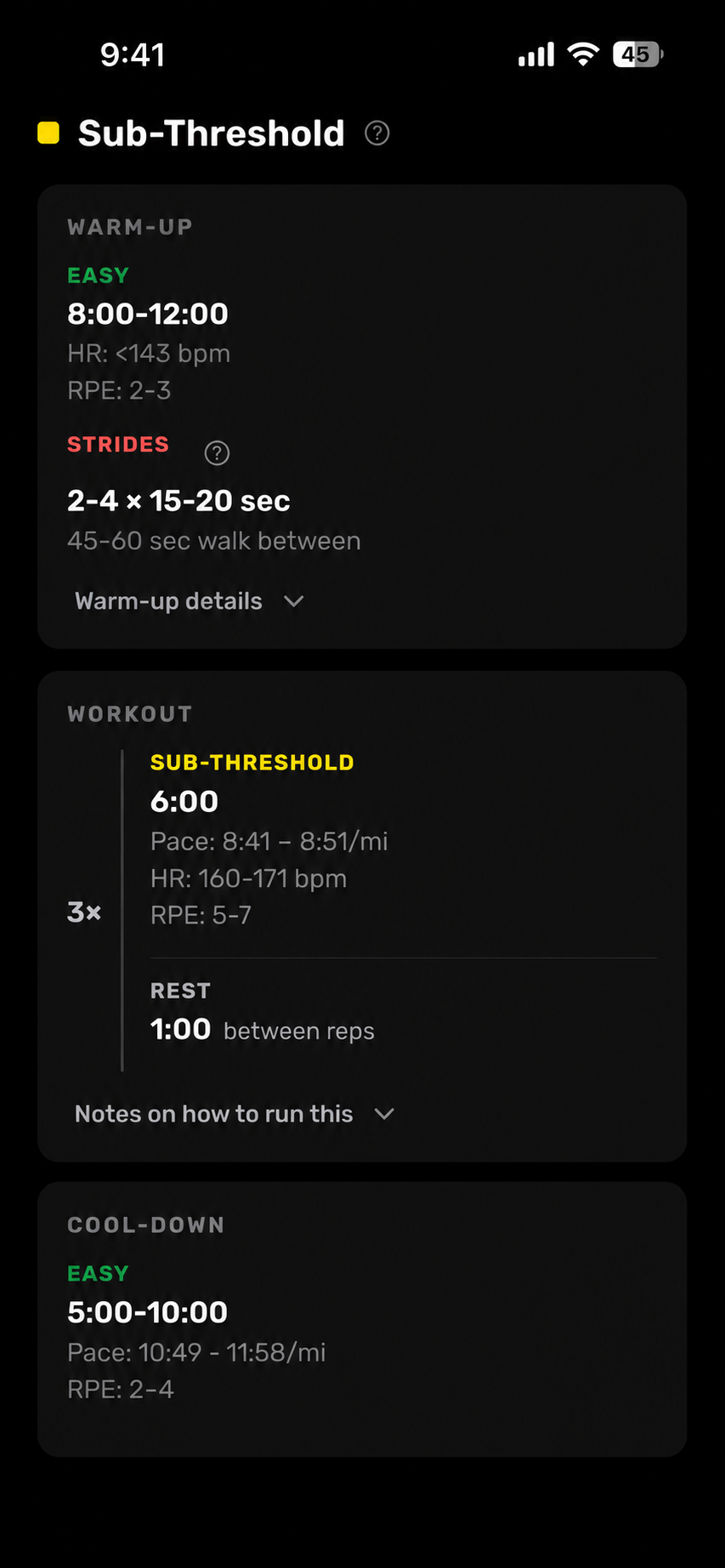
Warm-up, intervals, recovery, and cool-down are laid out for you. Open the notes for cues on pacing, effort, and keeping easy runs easy.
The Norwegian singles influence. Controlled, repeatable sub-threshold work is a key influence. Capacity builds that work into a broader plan of easy running, lifting, and race-specific training when you have a target. The mix depends on your priorities, experience, and current training.
The lifting
Max Strength. Build your squat, bench press, and deadlift, with supporting accessory work.
General Strength & Physique. Maintain or build muscle and strength with compound lifts and accessory work.
Keep It Simple. Straightforward training for newer lifters or anyone focused on maintaining strength and muscle.
General Strength & Physique
Example upper-body session
Max Strength
Example upper-body session
Built around your training
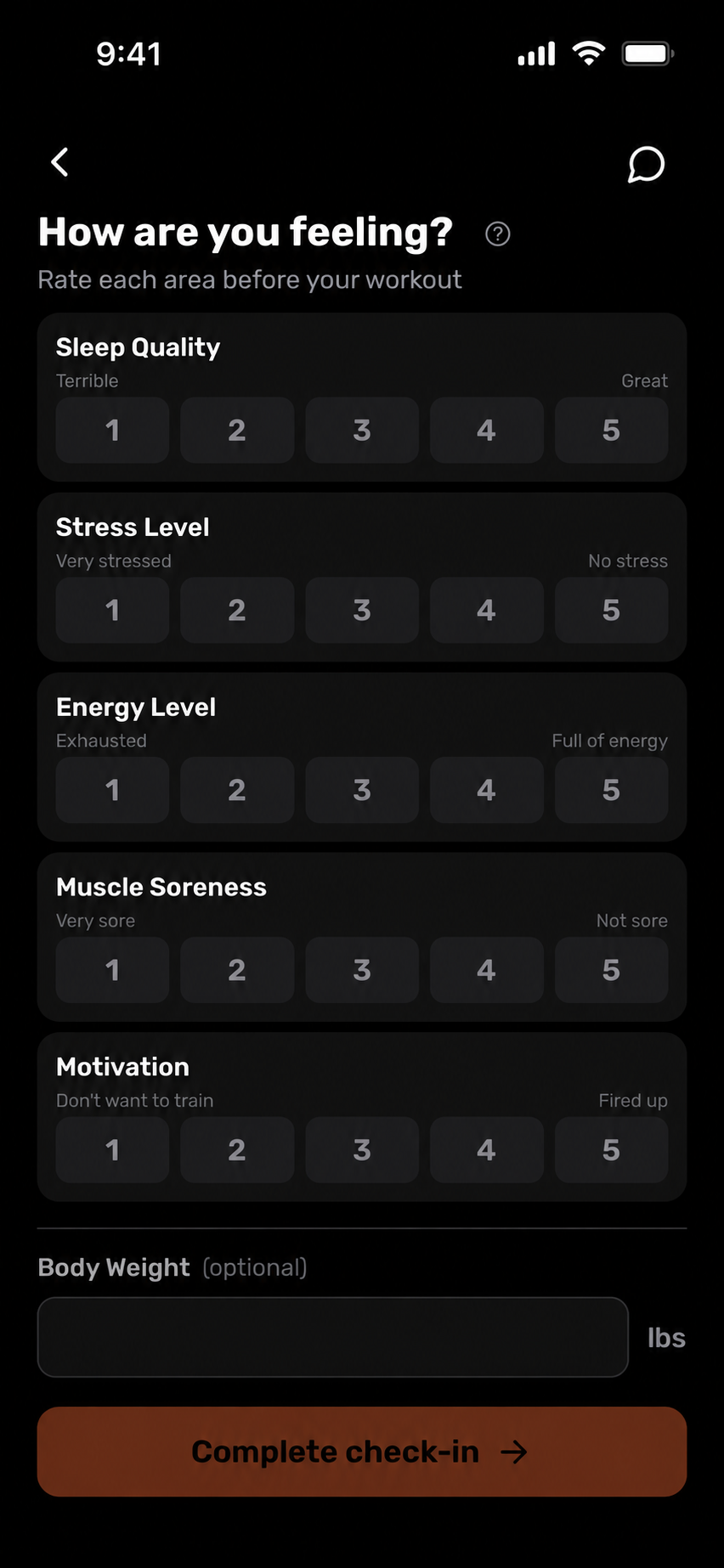
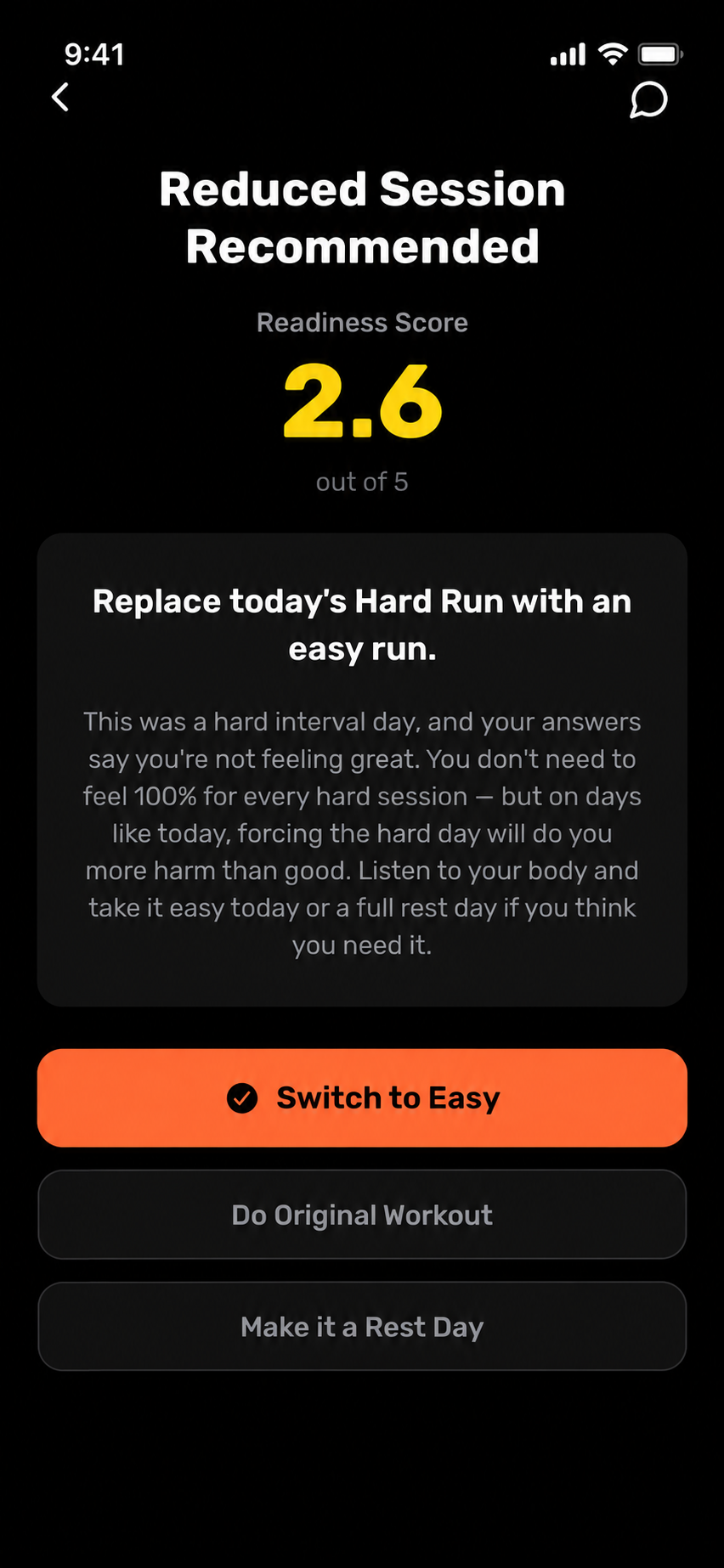
Before you train. Check in on sleep, stress, energy, soreness, and motivation. Review any recommended adjustment, then choose how to proceed.
As you progress. Your completed workouts, logged results, and feedback guide running progression and lifting targets.
The bigger picture
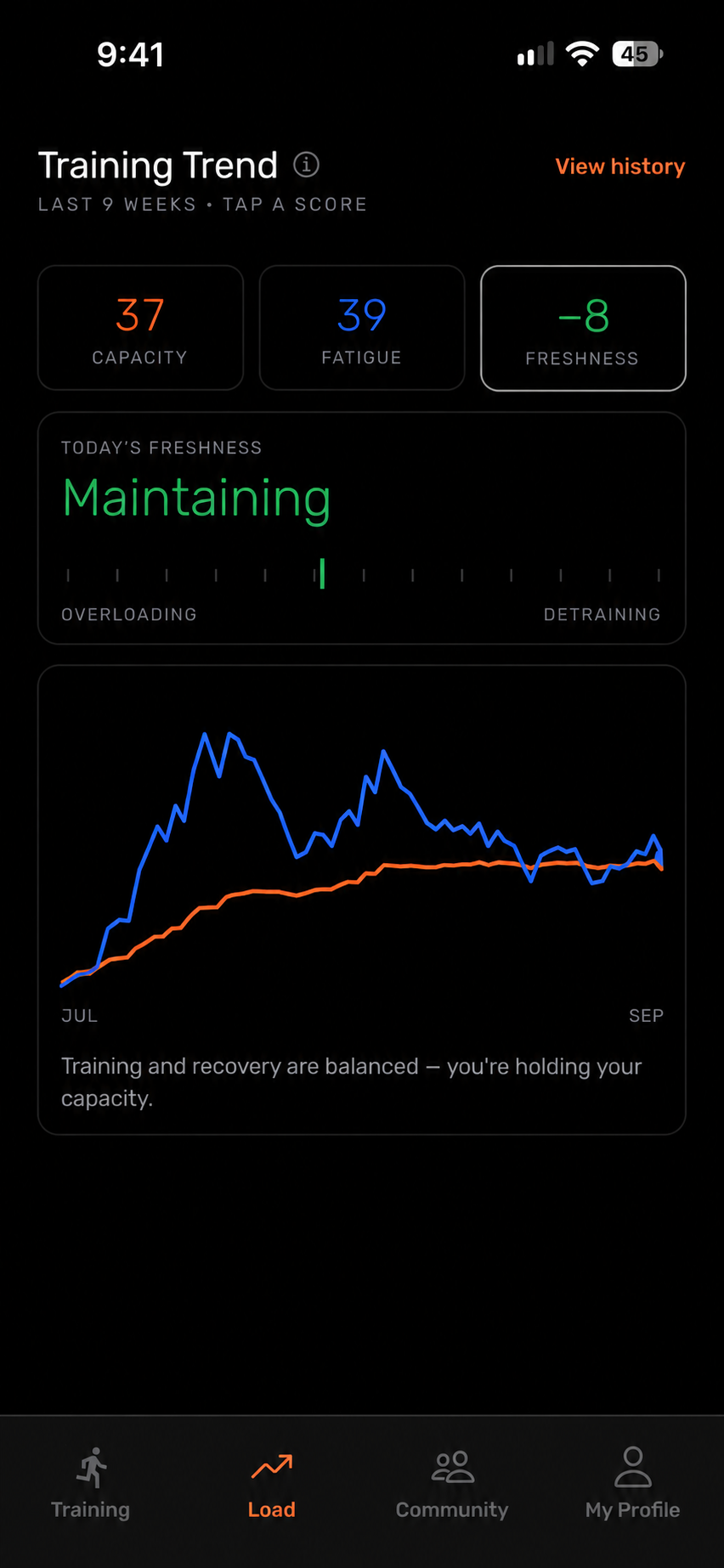
Your runs and lifts count toward the same training load, so you see the full picture in one place instead of two separate logs.
Capacity. How much training you've built up to handle over the past several weeks.
Fatigue. How much the last several days have taken out of you.
Freshness. The gap between the two. Higher means you're rested. Lower means you're carrying fatigue.
Who built it
Capacity is built by Hybrid Athlete Guy. He took his 5K from 20:35 to 16:56 over two years while not losing (too much) strength. He also ran a 1:26 HM, a 5:02 mile, and totaled (290lb Bench, 400lb Squat, 510lb Deadlift) in the same month. He's currently focused on maintaining as much strength as he can while trying to run a sub 1:15 HM, a sub 16:00 5k, a sub 4:30 mile, and seeing how good he can get at Hyrox. Over the next 5 years he also plans to run Boston and qualify for the Kona Ironman World Championships in his age group.
Capacity
Capacity is in beta now. Join the waitlist to get notified when it opens to the public.
Want to try Capacity now?
I’m looking for iPhone beta testers who will use the app and give honest feedback.
App previews use sample training data.